
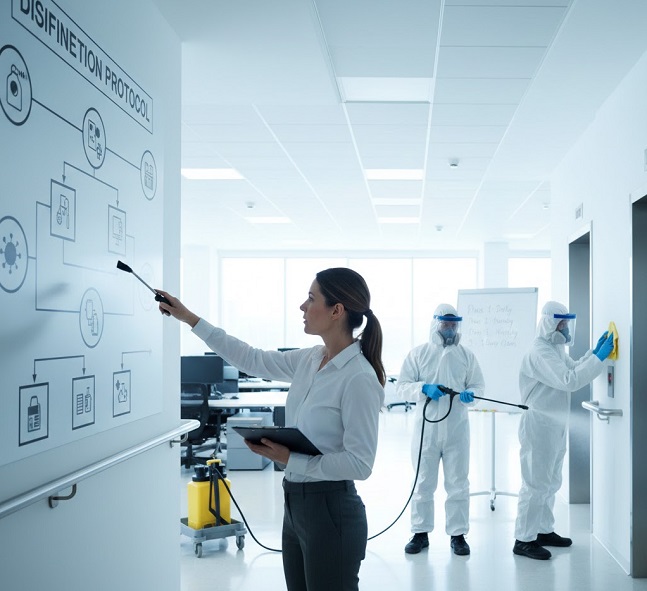
In today’s heightened health-conscious environment, a robust disinfection protocol is no longer just an operational checklist item—it’s a cornerstone of facility safety, occupant trust, and business continuity. For facility managers, the task of creating and implementing an effective plan can seem daunting. This step-by-step guide is designed to demystify the process, providing a clear roadmap to develop a protocol that is both scientifically sound and practically executable. Partnering with experts like Quality Cleaning Janitor Services can further streamline this process, bringing professional expertise and proven systems to your operation.
Step 1: Conduct a Comprehensive Risk Assessment
Before you disinfect, you must assess. Every facility has unique needs based on its use, traffic, and layout.
- Identify High-Touch Surfaces: Catalog areas like door handles, elevator buttons, light switches, shared equipment, restroom fixtures, and reception counters.
- Zone Your Facility: Classify areas into risk zones (e.g., high-traffic public zones, medium-risk office spaces, low-risk storage areas). This allows for targeted resource allocation.
- Consider Occupancy: Factor in peak hours, vulnerable populations (like in clinics or schools), and types of activities conducted.
This assessment forms the blueprint of your entire plan, ensuring efforts are focused where they are most needed.
Step 2: Select the Right Tools and Chemicals
Not all cleaners are disinfectants, and not all disinfectants are suitable for every surface. Using the wrong product can be ineffective or even damaging.
- EPA-Listed Disinfectants: Always choose products from the EPA’s List N (or your regional equivalent), which are proven effective against target pathogens.
- Understand Contact Time: The most critical factor! Contact time (or “dwell time”) is the period a surface must remain wet for the disinfectant to work. This dictates your procedure.
- Equipment Matters: Invest in quality microfiber cloths (color-coded to prevent cross-contamination), sprayers, and, for larger areas, electrostatic sprayers that ensure even coating. Quality Cleaning Janitor Services utilizes advanced electrostatic technology, ensuring comprehensive coverage even on hard-to-reach surfaces.
Step 3: Develop Detailed Procedural Documents
A protocol is only as good as its clarity. Document every step to ensure consistency across cleaning staff and shifts.
- Create SOPs (Standard Operating Procedures): Write clear instructions for disinfecting each zone and surface type, including the required dilution ratios, application method, and mandatory contact time.
- Establish Frequencies: Define how often disinfection occurs (e.g., restrooms every 2 hours, high-touch surfaces 3 times daily, full facility disinfection nightly).
- Include Safety: Mandate the use of Personal Protective Equipment (PPE) like gloves and goggles. Outline procedures for safe chemical storage, handling, and disposal.
Step 4: Train, Train, and Re-Train Your Team
Execution is everything. Thorough, ongoing training is non-negotiable.
- Hands-On Demonstrations: Don’t just hand out a manual. Show proper techniques, especially the importance of adhering to contact time.
- Focus on “The Why”: When staff understand the science behind dwell time and cross-contamination, compliance improves.
- Schedule Regular Refreshers: Make training a recurring event to reinforce standards and introduce new products or protocols.
For many facilities, leveraging the trained, specialized teams of a professional service is the most reliable path to consistent execution. A partner like Quality Cleaning Janitor Services brings intrinsically trained personnel, reducing the training burden on your internal management.
Step 5: Implement Clear Communication and Signage
Your protocol impacts everyone in the facility. Transparent communication builds trust.
- Inform Occupants: Use emails, posters, or meetings to explain the new measures being taken for their safety.
- Post Cleaning Schedules: Let people know when and how areas are cleaned.
- Use “Last Cleaned” Signage (where appropriate): This provides visible reassurance in high-use areas like conference rooms or breakrooms.
Step 6: Monitor, Audit, and Adapt
A static protocol will inevitably fail. Establish a system for continuous improvement.
- Conduct Regular Audits: Use checklists to inspect cleaned areas. Are high-touch surfaces properly addressed? Are supplies stocked?
- Gather Feedback: Encourage feedback from building occupants and cleaning staff—they are your eyes on the ground.
- Stay Informed & Adapt: Public health guidelines and best practices evolve. Be prepared to update your protocols, products, and frequencies in response to new information or specific health events.
Step 7: Document and Record for Compliance
Maintain meticulous records. This is crucial for liability, quality control, and potential health authority inquiries.
- Log Cleaning Activities: Document what was cleaned, when, and by whom.
- Track Inventory: Monitor chemical and supply usage.
- Keep Safety Data Sheets (SDS) readily accessible for all chemicals used.
Conclusion: A Foundation for Health and Confidence
Building a thorough disinfection protocol is a systematic process that prioritizes health, demonstrates due diligence, and fosters a secure environment for all occupants. While this guide provides the framework, the execution demands time, expertise, and consistent attention to detail.
For facility managers seeking to ensure the highest standard of care without overburdening internal resources, partnering with a dedicated professional service is a strategic solution. Quality Cleaning Janitor Services specializes in designing and implementing customized, science-backed disinfection programs that meet rigorous compliance standards. By integrating their expertise, you can transform your disinfection protocol from a reactive task into a proactive pillar of your facility’s health strategy, allowing you to focus on your core operations with peace of mind.
For more insights on maintaining a healthy facility, explore our related article on daily cleaning checklists for office buildings (internal link). To understand the latest standards in commercial cleaning, we recommend reviewing the guidelines from the ISSA, the worldwide cleaning industry association.